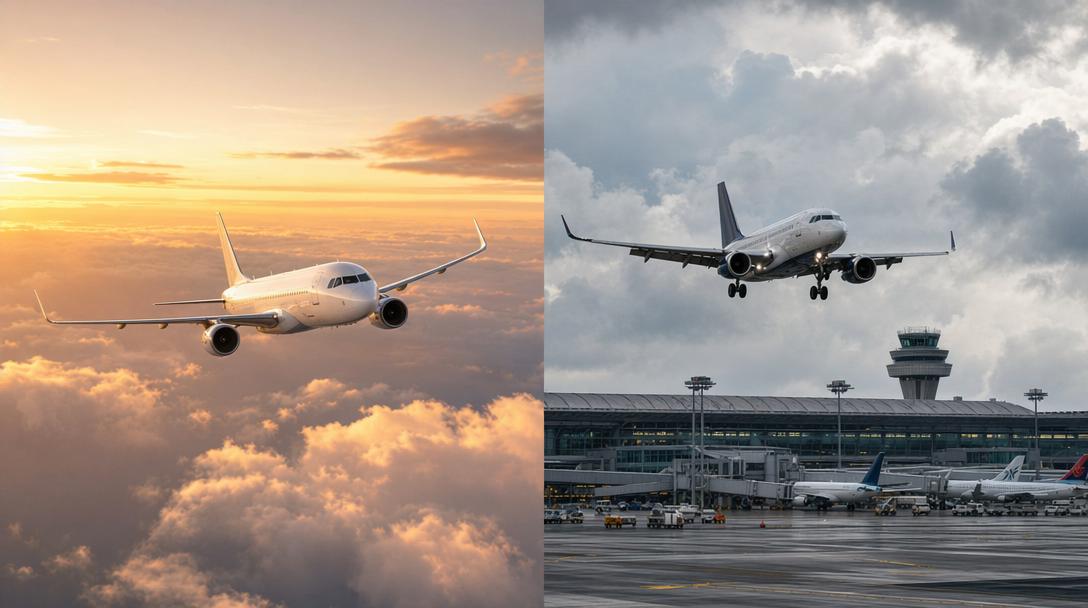
Booking a flight often comes down to a single dilemma: pay more for a direct flight or save money with a connecting flight. For example, a New York to London trip might cost $300 extra for a nonstop flight that cuts travel time by 5 hours. Yet connecting flights through hubs like Amsterdam or Dubai often risk delays that could leave you stranded overnight. The choice isn't always straightforward.
Overview
Direct Flights
Direct flights travel nonstop from origin to destination without intermediate stops. Their primary strength lies in saving time—often 4+ hours compared to connecting flights—and eliminating the stress of navigating layovers. Airlines like JetBlue and Lufthansa promote direct routes for business travelers prioritizing efficiency.
Connecting Flights
Connecting flights require changing planes at a hub airport. Their main advantage is lower fares—up to 40% cheaper than direct options—due to airlines consolidating routes. Budget carriers like Norwegian Air and Ryanair often use connecting models to offer rock-bottom prices.
Key Differences
| Feature | Direct Flights | Connecting Flights |
|---|---|---|
| Average Cost | $200-$500 more | Up to 40% cheaper |
| Travel Time | Shortest possible | 2-10 hours longer |
| Convenience | One security check-in | Multiple airport transfers |
| Flexibility | Fixed departure times | More route options |
| Delay Risk | Low | 15-30% chance of missed connection |
The most critical difference lies in the cost-time trade-off. Direct flights lose value when layover delays erase time savings, while connecting flights become less appealing when price gaps narrow below $150.
Quick Take: Direct flights suit travelers prioritizing time and predictability. Connecting flights work best for budget-conscious passengers with flexible schedules.
Strengths and Weaknesses
Direct Flights
Direct flights excel at minimizing travel fatigue, making them ideal for long-haul trips or urgent itineraries. They also reduce risks like lost luggage or missed connections. However, their high cost often limits access to premium passengers. A real-world downside: a last-minute NYC to Los Angeles direct flight might cost $1,200 versus $800 for a connecting option with a 3-hour layover in Chicago.
Connecting Flights
Connecting flights open access to more destinations through airline hub networks. For example, a traveler from Boston to Rome might connect through Philadelphia or Paris for lower fares. The downside? A delayed first leg could strand passengers overnight, as seen in 2023 when 22% of connections at Atlanta Hartsfield Airport failed due to weather disruptions.
Which One Should You Choose?
Choose direct flights if you value time savings or have inflexible schedules. Opt for connecting flights when budget constraints outweigh convenience concerns.
Our Recommendation: For most travelers, direct flights deliver better value when the fare gap stays under $300 for trips under 8 hours.
The deciding factor often comes down to how much stress you can tolerate. If you want to avoid layover risks, invest in travel insurance for connecting flights. For bargain hunters, use our cheap flights tips to find discounted direct routes—sometimes major carriers match budget airline prices during sales.
Frequently Asked Questions
What is the main difference between direct and connecting flights?
Direct flights travel nonstop from origin to destination, saving time and eliminating layovers. Connecting flights require changing planes at a hub airport, often offering lower fares but increasing travel time and potential for delays.
How much more expensive are direct flights compared to connecting flights?
Direct flights can be $200-$500 more expensive than connecting flights. Connecting flights can be up to 40% cheaper than direct options.
How much time can direct flights save?
Direct flights can save travelers 4 or more hours compared to connecting flights. Connecting flights typically add 2-10 hours to travel time.
What is the risk of delay with connecting flights?
Connecting flights have a 15-30% chance of a missed connection. Delays in the first leg can sometimes lead to passengers being stranded overnight.
When should I choose a direct flight?
Choose direct flights if you prioritize time savings, have an urgent itinerary, or have inflexible schedules. They are also ideal for minimizing travel fatigue on long-haul trips.
When are connecting flights a better option?
Connecting flights are a better option when budget constraints outweigh convenience concerns. They are also suitable for travelers with flexible schedules who want to access more destinations through airline hub networks.
What is the recommended fare gap for choosing a direct flight?
For most travelers, direct flights offer better value when the fare difference stays under $300 for trips under 8 hours.