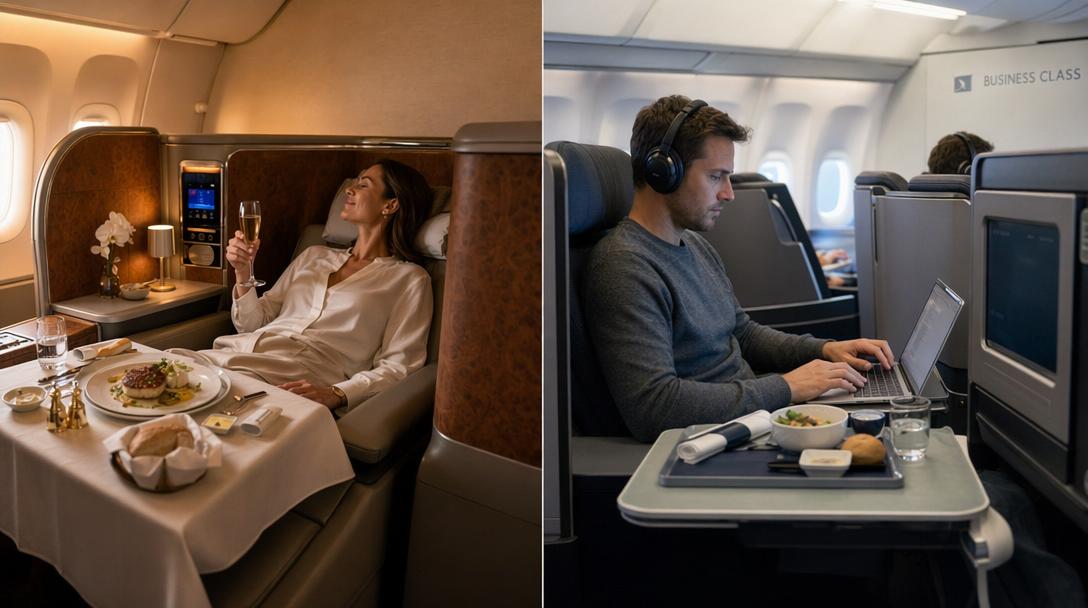
Airlines charge up to 3x more for first class than business class on transatlantic routes, but the gap in experience doesn't always match the price difference. Travelers weighing premium cabin upgrades face a critical choice: pay exponentially more for absolute luxury or optimize value with business class comforts. This guide breaks down the real-world differences to help you decide.
Overview
First Class
First class delivers the pinnacle of air travel with private suites on carriers like Emirates and Singapore Airlines. Expect fully enclosed cabins featuring 6'+ lie-flat beds, caviar service paired with vintage champagne, and personalized attention from dedicated flight attendants. Its primary strength lies in exclusivity—most major airlines cap first class seating at 12-18 seats per aircraft.
Business Class
Modern business class offers lie-flat seats, priority boarding, and access to upscale airport lounges. Airlines like Delta and United now provide 1-2-1 seat configurations on international routes, eliminating the middle-seat curse. This class excels at balancing luxury with practicality, costing 30-50% less than first class while still delivering premium amenities like amenity kits and chef-designed meals.
Key Differences
| Feature | First Class | Business Class |
|---|---|---|
| Seating | Private suites (23-78 sq ft) | Semi-private pods (15-20 sq ft) |
| Dining | Michelin-starred chefs | Premium restaurant-quality meals |
| Cost (NY to London) | $8,000-15,000+ | $4,000-6,000 |
| Lounge Access | Exclusive first-class lounges | Premium business lounges |
| In-flight Service | 1:1 flight attendant ratio | 1:4-1:6 flight attendant ratio |
| Baggage Allowance | 3-4 checked bags | 2-3 checked bags |
The most significant disparity appears at 40,000 feet: first class delivers true private sanctuary while business class remains a communal experience. Business class notably lacks the 24-inch+ privacy dividers found in first class cabins from Qatar and Etihad.
Quick Take: First class caters to deep-pocketed travelers seeking absolute exclusivity, while business class suits professionals prioritizing comfort without extravagant spending.
Strengths and Weaknesses
First Class
First class shines during ultra-long-haul flights (14+ hours), where private showers and full-sized toiletries from ANA or Lufthansa become invaluable. The 80-inch bed length on Emirates' A380 suits travelers over 6'5", but these perks come at a cost: a single JFK-DXB round-trip ticket could fund six economy flights plus a 5-star Dubai hotel stay. Downside? Limited availability forces last-minute upgrades to business class, as seen on Cathay Pacific's Boeing 777 routes.
Business Class
Business class wins for transcontinental trips under 10 hours, where lie-flat seats and pajama service provide rest without breaking budgets. American Airlines' Flagship Suites on the 777-300ER offer 20" privacy screens—a sweet spot between cost and comfort. However, shared lavatories and lounge access (limited to airline-specific facilities) can undermine the premium experience during terminal delays. The 1:6 crew ratio also means slower meal service compared to first class' dedicated attendants.
Which One Should You Choose?
Choose first class for milestone celebrations or non-stop flights exceeding 12 hours where privacy matters. Opt for business class when attending international conferences or traveling with a partner—many airlines offer side-by-side seating in configurations like Virgin Atlantic's 787 Dreamliner. Business class delivers 80% of the luxury for 50-60% of the cost.
Our Recommendation: Business class offers the best value for most premium travelers—especially those booking with points through cards like Chase Sapphire Reserve. First class earns its keep only for solo travelers on ultra-long-haul flights.
The deciding factor remains simple: pay twice as much for 2x space and 3x privacy in first class, or maximize comfort-to-cost ratio with business class. For budget-conscious professionals, consider using points from your travel insurance for flights to upgrade—it's often cheaper than paying cash for business class.
Frequently Asked Questions
What are the main differences between first class and business class on international flights?
First class offers private suites, often with fully enclosed cabins and 6'+ lie-flat beds, while business class provides semi-private pods with lie-flat seats. First class typically includes more personalized service, exclusive lounges, and a higher baggage allowance compared to business class.
How much more expensive is first class compared to business class?
First class can cost up to three times more than business class on transatlantic routes. For example, a New York to London flight might cost $8,000-$15,000+ in first class, while business class would be around $4,000-$6,000.
What kind of dining experience can I expect in first class versus business class?
First class often features dining experiences curated by Michelin-starred chefs, sometimes including caviar service with vintage champagne. Business class offers premium restaurant-quality meals, which are still a significant upgrade from economy dining.
When is first class a better choice than business class?
First class is ideal for ultra-long-haul flights exceeding 12-14 hours, especially for solo travelers seeking absolute privacy and luxury, such as private showers or full-sized toiletries. It's also suitable for milestone celebrations where an extravagant experience is desired.
When is business class a better choice than first class?
Business class offers excellent value for most premium travelers, especially for transcontinental trips under 10 hours or when attending international conferences. It provides a comfortable lie-flat seat and premium amenities at 30-50% less cost than first class.
Do both first class and business class offer lie-flat seats?
Yes, both first class and modern business class cabins offer lie-flat seats. However, first class typically provides more spacious, fully enclosed private suites with longer beds, while business class offers semi-private pods.
What is the typical flight attendant to passenger ratio in first class versus business class?
First class typically boasts a highly personalized 1:1 flight attendant ratio, ensuring dedicated service. Business class usually has a ratio of 1:4 to 1:6, meaning service might be slightly slower compared to first class.